Tanjim Islam Riju
Artificial Intelligence, Machine Learning, Computer Vision, and Medical Imaging
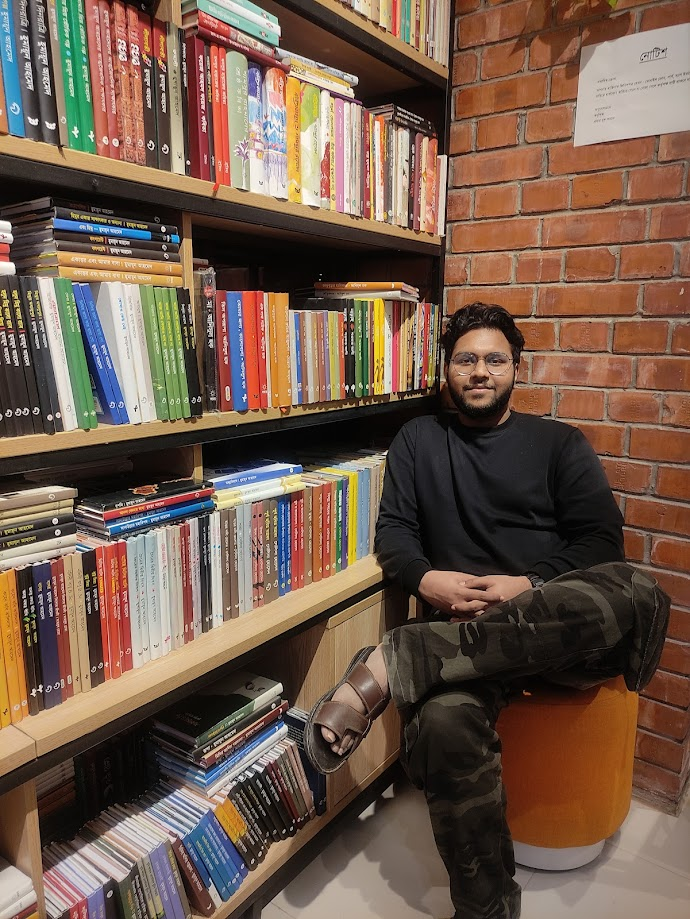
About Me
I work at the intersection of computer vision and multimodal machine learning , with a focus on research that is reproducible, evidence grounded, and rigorously evaluated. I care a lot about understanding failure modes, hallucinations, shortcut learning, and brittle generalization, especially in high-stakes settings like medical imaging .
I’ve worked on gaze-supervised learning for chest X-rays , using human attention signals to better align diagnosis and support more faithful report generation . I’ve also contributed to long-document and long-context evaluation as part of a broader goal: making model limitations visible and measurable through stronger benchmarks and analysis.
Alongside research, I bring solid software engineering experience. I build end-to-end systems and research tooling, often with React and Tailwind on the frontend, Go on the backend, plus Docker and AWS for practical deployment.
I’m preparing to pursue a PhD in AI/ML . My goal is to advance reliable computer vision and multimodal methods that are both scientifically grounded and genuinely useful.
Education
MSc in Computer Science and Engineering
Specialization in Data Science
B.Sc. in Computer Science and Engineering
Thesis: Medical Image Analysis Relevant Coursework: Artificial Intelligence (CSE422), Neural Networks (CSE425), Algorithms (CSE221), Data Structures (CSE220), Discrete Mathematics (CSE230), Computer Graphics (CSE423).
Experience
MAEKNIT Inc.
April 2026 – Present
Full-stack Engineer
- Develop Odoo ERP workflows for quoting, manufacturing, inventory, and logistics using Python and PostgreSQL.
- Build full-stack features for MAEKNIT’s Next.js platform, connecting React interfaces, APIs, and PostgreSQL data with Odoo.
- Support AWS deployments and storage using Docker, ECS Fargate, RDS, and S3.
Odoo · Python · Next.js · React · TypeScript · PostgreSQL · AWS · Docker
Invicta Solutions Limited
June 2024 – Jan 2026
Fullstack Developer
- Developed scalable web and mobile applications using React.js , React Native , and Node.js .
- Built and deployed containerized backend services with AWS ECS and Docker, improving system reliability by 35%.
- Designed visual elements and UI mockups using Figma and Adobe XD .
- Collaborated with design and backend teams to integrate REST APIs and assets seamlessly.
Kaz Software Ltd.
July 2023 – May 2024
Software Engineer
- Designed RESTful services in Node.js with PostgreSQL , increasing data retrieval efficiency by 25%.
- Ensured UI consistency across projects using TailwindCSS and Adobe Illustrator , reducing inconsistencies by 40%.
- Migrated microservices to AWS Lambda , improving reliability by 30% and cutting operational costs by 20%.
Infolytx
Jan 2023 – June 2023
Backend Engineer
- Developed REST APIs and backend pipelines using Python and PostgreSQL .
- Built internal dashboards with custom graphics using Photoshop and Dreamweaver .
LeadSoft Bangladesh Ltd.
July 2022 – Dec 2022
Mobile Developer Intern
- Built mobile UI components and integrated Firebase for real-time user tracking.
DataSoft Systems
Jan 2022 – June 2022
DevOps Intern
- Automated CI/CD pipelines and managed containerized deployments using Docker and Linux servers.
Genex Infosys Ltd.
Sep 2021 – Dec 2021
UI/UX Design Asst.
- Designed web and mobile graphics using Photoshop , Illustrator , and Dreamweaver .
Research
Eyes on the Image: Gaze Supervised Multimodal Learning for Chest X-ray Diagnosis and Report Generation
Tanjim Islam Riju, Shuchismita Anwar, Saman Sarker Joy, Farig Sadeque, Swakkhar Shatabda
arXiv:2508.13068
Focused on leveraging gaze data and multimodal contrastive learning to improve medical AI systems. Developed frameworks integrating vision-language models for diagnosis and report generation.
Context as a Signal: Context-Aware Transformers for Fine-Grained Depression Emotions
Saman Sarker Joy, Tanusree Das Aishi, Shuchismita Anwar, Tanjim Islam Riju, Adnan Mahmood
2026 IEEE International Conference on Digital Health (ICDH)
People who write about depression on social media often convey several emotions that shift within a single post, yet most datasets flatten these dynamics into one post-level label. To enable sentence-level study, we present DepressionEmo-SL, a corpus of Reddit posts in which each sentence is annotated with one of nine emotions: anger, cognitive dysfunction, emptiness, hopelessness, loneliness, sadness, suicide intent, worthlessness, or no emotion. We propose a four-level context protocol (C0-C3) that provides models with progressively larger windows of surrounding text to assess the impact of narrative context on classification. We evaluate five Transformer encoders, including MentalBERT and MentalRoBERTa, under each context setting. Results show that wider narrative context consistently improves performance and that ensembling across context levels provides further improvements. However, these improvements are not uniform across categories, with some emotions benefiting more from additional context than others. Overall, our findings show that context is an important factor in sentence-level depression emotion analysis, while also highlighting the challenges that remain for reliable category-level classification.
Projects
Awards and Honors
VC's List
BRAC University
Dean's List
BRAC University
Graduated with Distinction
BRAC University
Contact
Let's connect